Kansas City, MO
4/16/10 3:01 PM
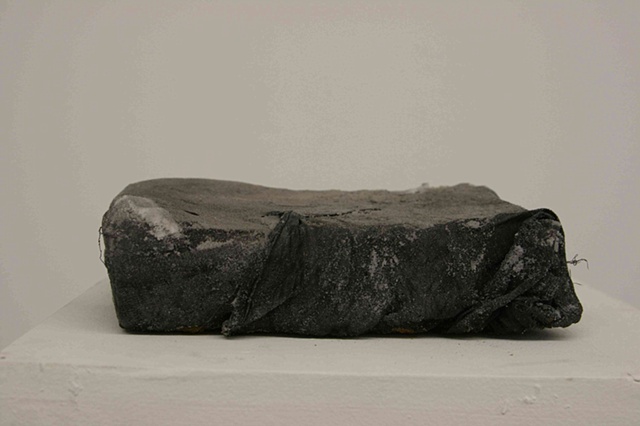
Darkness is not exactly an artist material, but it is in the work of Misha Kligman. As are, alongside it, weight and magic and invisibility. These are not, of course, elements that actually appear on Kligman’s materials list, but bear with me. What does appear on that list is equally important and consists of, among standard media like graphite and acrylic, less common ones such as burnt book pages and salt. How this all comes together is a kind of transubstantiation—the process whereby one substance is changed into another, as when bread and wine become the body of Christ in the Eucharist or, just as mysteriously, water becomes ice through freezing. In Kligman’s drawings and sculpture, physical materials like the ones listed above expand and contract, combine and separate, to form unexpectedly potent containers of darkness and the like. In the drawings, blackness is endless, enveloping and repressive; in the sculpture, destruction seems to accumulate like so much crystallized salt. The few realistic elements—a pair of wine glasses in the drawing “The Invisible”—are the only ones that don’t belong, being all too visible in the face of invisibility. It is tempting to link this interest in the bleak with the artist’s biography—Kligman was born in Kazan, a port city in western Russia—but there is arguably enough bleakness to go around without having to rely on birthplaces to locate it.
—Lori Waxman